A residential gate that refuses to open, reverses halfway, scrapes the driveway, or works only from one control needs a safe diagnosis before anyone changes motor settings. You will be able to separate power, control, safety-sensor, and mechanical faults, recover the gate after a power cut, and prepare useful information for a technician.
Key takeaways
- Keep people, pets, and vehicles away before testing the gate.
- Check for mechanical binding before replacing electrical parts.
- Inspect sensors and leaf alignment when the gate reverses or one leaf fails.
- Use the manual release to recover the gate after a power cut.
Make the Gate Safe Before You Test It
Stop using the remote and keep people, pets, and vehicles clear of the opening. An unpredictable motorized swing gate can move without warning, so do not stand between the leaves or reach toward hinges, rollers, stops, or the actuator.
1. Switch off the gate’s mains isolator. Do not rely on the remote, wall button, or control-board light to make the system safe; isolate the supply before touching the gate.
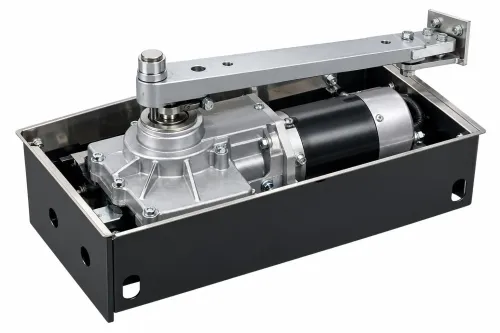
2. Locate the operator’s keyed manual-release mechanism and use the supplied key exactly as shown in its manual. Never force the release lever or pull against a powered actuator.
3. With the operator disengaged, move each leaf through its complete travel by hand. Stop if a leaf drops, scrapes, binds, strikes its stop, feels unusually heavy, or needs much more force than the other leaf.
4. Check that the leaves cannot swing into a road, parked vehicle, pedestrian route, or person while power is off. Secure them in a safe position instead of holding them by hand.
5. Inspect for a trapped object, shifted hinge, loose fastener, damaged stop, bent frame, or obstructed photocell. Clean only accessible photocell faces; do not adjust force settings or replace the control board yet.
Mechanical resistance is a more urgent clue than many automatic swing gate problems. Repair binding before restoring power, because raising motor force can defeat obstruction protection and turn a small fault into a crushing hazard.
Separate Electrical Faults from Mechanical Binding
After isolating mains power, disengage the operator with its keyed manual release and move each leaf through its full travel by hand. This is the decisive test for a motorized swing gate for troubleshooting in Nagpur: a leaf that scrapes, drops, binds, or needs much more force than the other has a mechanical fault.
Inspect the structure before changing motor-force settings. Check:
- Hinges, rollers, and bearings for stiffness or damage
- Gate alignment, sagging leaves, and contact with the ground
- Mechanical end stops and loose mounting fasteners
- Actuator brackets for movement or distortion
A binding leaf can trigger automatic swing gate problems such as slow travel, stopping halfway, or reversal. Increasing force to overcome it reduces obstruction protection and does not repair the gate.
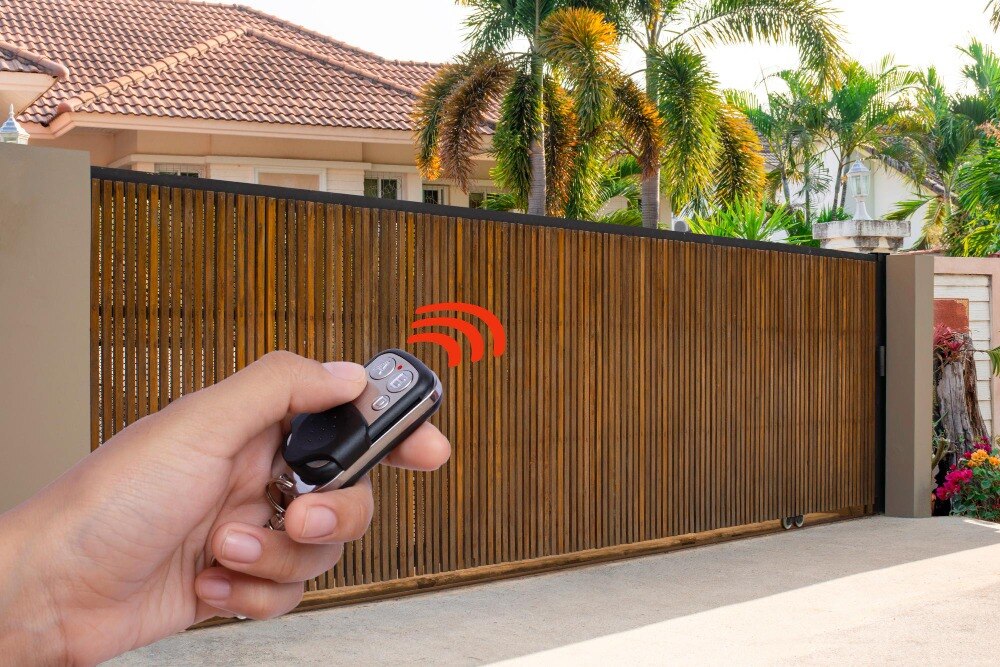
If both leaves move freely by hand, restore power only after the area is clear and check the supply isolator, fuse, controller status light, terminal tightness, cable glands, and photocells. A wired push button that works while the remote fails points to the remote battery, receiver, antenna, radio interference, or rolling-code enrolment—not the motor.
Stopping at the same physical point suggests a limit switch, encoder, shifted stop, or lost travel learning. Unpredictable stopping points point more strongly to loose wiring, water ingress, intermittent supply, photocells, or a controller fault. Record the stop position, LEDs, weather, and travel direction instead of repeatedly cycling the gate.
Trace Reversing, Sensor, and Two-Leaf Faults
A gate that stops, reverses, or moves one leaf incorrectly is usually reacting to a safety input, excess resistance, or incorrect controller settings—not a failed motor. An automatic swing gate problem often begins with a dirty photocell, shifted stop, binding hinge, incorrect travel limits, or force sensitivity set too low.
- Isolate mains power and use the manual release. Move each leaf through its full arc. A leaf that scrapes, drops, binds, or needs much more force than the other has a mechanical fault; repair it before changing motor force.
- Clean both photocell lenses and check their alignment. Remove leaves, insects, and parked objects from the beam. Restore power and watch the controller status light: a broken photocell circuit can prevent closing or make the gate reverse during closing.
- Inspect the open and close limit switches, their wiring, and the mechanical stops. A shifted stop or failed limit input can make the operator stop early, overrun, or reverse. Relearn travel only after the leaves move freely.
- For a two-leaf motorized swing gate, verify that the controller’s master leaf opens first, the slave follows after the programmed delay, and closing occurs in the specified order. Check motor polarity, limit inputs, leaf-delay settings, and the learned cycle. Swapping motor wires changes direction; it does not fix wrong sequencing or limit logic.
Do not increase force to overcome binding. That reduces obstruction protection and can turn a small alignment fault into an injury or gearbox failure.
Recover the Gate After a Power Cut and Nagpur Weather
After a power cut, keep people and vehicles away from the opening before touching the gate. Isolate the mains supply at the gate’s switch or isolator, even if the property still has electricity.
- Use the manufacturer’s keyed manual release; never force the leaf against a locked actuator.
- Move each leaf by hand to a closed or otherwise secure position. Stop if it drops, scrapes, binds, or feels unusually heavy.
- Secure the leaves with the supplied latch or a temporary restraint that cannot enter the vehicle path.
- Re-engage the operator fully with the release key, following its marked direction. A partial engagement can damage the gearbox when power returns.
- Restore power only after removing people, tools, and restraints from the travel area.
- Run the controller’s specified reset or travel-learning cycle. Do not guess the sequence, because controllers differ.
- Test open, stop, close, photocells, and obstacle reversal from outside the leaf arc.
Nagpur’s dust, summer heat, and monsoon moisture make enclosure seals, cable glands, drainage, and photocells important during swing gate recovery. If water is visible inside a control box or underground operator, leave power isolated and arrange inspection; repeated drying will not fix water ingress. Clean the photocell lenses, but do not open a wet enclosure.
Include manual-release operation, hinge and stop checks, fastener inspection, and a complete safety test in swing gate maintenance. Never increase motor force to overcome a leaf that binds by hand.
Know When the Gate Needs Professional Diagnosis
Before calling an installer, record the failure instead of repeatedly pressing the remote. Note whether the gate fails to open, stops halfway, reverses, or moves one leaf first; record the weather, time, warning lights, unusual sounds, and whether the fault changes after drying.
- Photograph both leaves, hinges, stops, photocells, actuator arms, control-box wiring, cable glands, and any water, rust, impact, or scraped paint.
- Take a short video from a safe position showing the complete fault, including indicator lights and the two-leaf sequence.
- Write down the operator brand, model, installation age, remote response, manual-release movement, and last swing gate maintenance visit.
- Tell the installer what you tested: supply isolator, photocell lenses, remote battery, manual movement, and re-engagement after swing gate recovery. Do not alter force settings before recording them.
Stop DIY testing when a leaf binds, drops, scrapes, needs markedly more hand force, or cannot stay safely supported. A burning smell, sparking, exposed conductor, wet control box, damaged cable, cracked hinge, uncontrolled movement, or a failed obstruction test also requires isolation and professional diagnosis.
Do not open a live enclosure or bypass photocells; raising motor force can turn a mechanical fault into an impact hazard.
For motorized swing gate for troubleshooting in Nagpur, Nagpur Automation (08048400505) can use your photographs, video, model details, and fault history to distinguish alignment, control, and water-ingress problems before replacing parts.
Related products
 | We are highly acknowledged organization engaged in presenting remarkable range of Automatic Swing Gate. View product → |
 | Automatic Motorized Swing Gate Our company has emerged as one of the top most positions in the industry for offering a wide range of Automatic Motorized Swing Gate. View product → |
Frequently asked questions
How do I make a motorized swing gate safe before troubleshooting?
Stop using the remote, keep people, pets, and vehicles clear, and never stand between the leaves or reach near moving parts.
How can I tell whether an automatic swing gate problem is electrical or mechanical?
Check for binding at the hinges, rollers, stops, and actuator before investigating power, controls, or wiring. A stiff gate points to a mechanical fault.
What should I check when a swing gate reverses or only one leaf moves?
Inspect the safety sensors, leaf alignment, travel stops, and connections. Two-leaf gates also need the control board and sequencing checked when one actuator does not operate.
How do I recover a swing gate after a power cut in Nagpur?
Use the actuator's manual release according to its instructions, move the gate clear of the opening, and secure it until power returns or a technician diagnoses it.
Related products
 | We are offering a wide range of Swing Gate Automation. an aesthetic match for any architectural style. View product → |
 | We hold expertise in offering a superior range of Swing Gate Opener, which is commonly used in offices, apartments and corporate houses. View product → |
 | MOTORIZED SWING GATE AUTOMATIC CONCEAL SWING GATE MOTOR AUTOMATIC CONCEAL SWING GATE MOTOR View product → |
Keywords