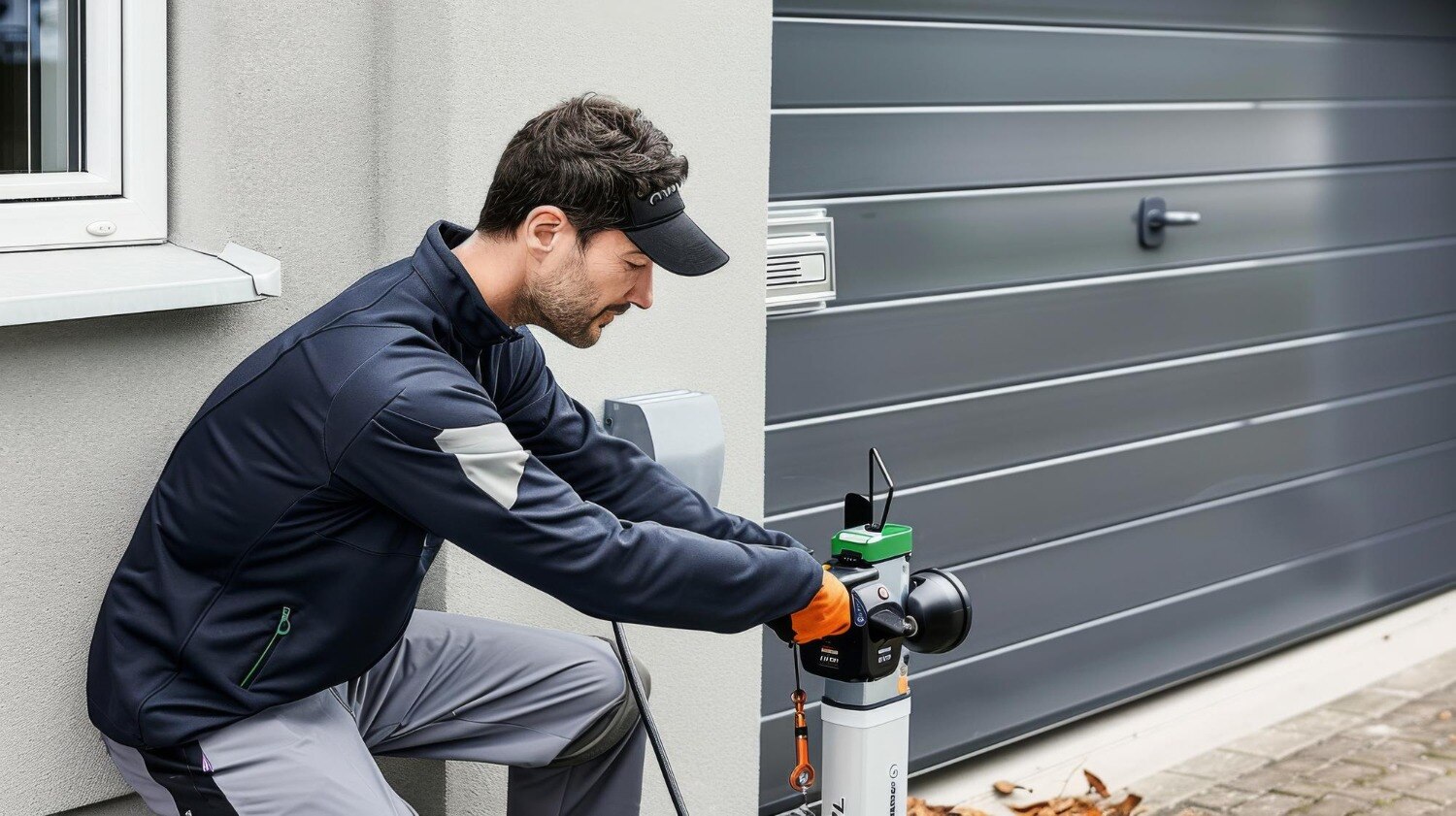
Rain-related failure does not automatically mean the motor has burned out. Water can disable a photocell, corrode a terminal, trip an RCCB, overload a gate with swollen hinges, or enter a poorly sealed control box. You will learn how to separate an electrical, safety-sensor, mechanical, and installation fault, then decide what you can check safely and when to call for repair.
Key takeaways
- Check mains power, fuses, photocells, and manual gate movement first.
- Drying alone is unsafe when water reached terminals, windings, or gearbox oil.
- Raise and seal control boxes above splash level before the next monsoon.
- Repair bent hinges, drainage, and gate drag before replacing the motor.
What actually fails when rain stops the gate
Rain usually stops a swing gate through its controls or safety devices before it burns out the motor. Water inside a low-mounted control box causes leakage between terminals, corrodes relay contacts, and creates intermittent faults that vanish after drying. Moisture reaching the motor or gearbox can damage winding insulation, bearings, and drive components.
A wet, muddy, condensed, or shifted photocell can inhibit closing even when the path is clear. Moisture can also affect limit switches, encoders, the remote receiver, and safety-edge inputs.
Storm voltage fluctuations may trip thermal protection, damage control electronics, or reveal a weak run capacitor; humming, slow travel, and repeated trips point to these possibilities rather than proving motor failure.
- Opens but will not close: inspect photocells, safety inputs, and close-limit components.
- Hums without movement: suspect a weak capacitor, damp terminals, overload, or gearbox resistance.
- Stops at one position: check a limit switch, encoder, obstruction, or mechanical binding.
- Works after drying: treat it as moisture ingress, not a cured fault.
IP44 is not protection against every monsoon condition. Under IEC 60529, it resists objects larger than 1 mm and splashing water, not hose jets or temporary immersion. Unsealed cable glands, cracked conduit, upward-facing cable loops, open drain holes, and low-mounted boxes defeat that protection by directing water inside.
Check every part of a swing gate motor Nashik installation, not only the operator label. These are common swing gate motor problems.
How to tell whether power, safety, or the gate itself is at fault
Keep people and vehicles clear of the gate. Do not open a wet live control panel. Isolate the supply at the isolator before inspecting it; if water, smoke, exposed conductors, or a burning smell is present, stop and call a technician.
1. Check the MCB, RCCB, and control-box fuse with power isolated. A tripped RCCB points to leakage, while a blown fuse can indicate a short circuit. Do not keep resetting either device.
2. Look for standing water, dampness, burnt odour, green or white corrosion, loose terminals, and failed cable glands. Never touch terminals until the supply is isolated and the enclosure is dry.
3. Clear mud, stones, leaves, and pooled water from the gate path. Check whether the leaf rubs the post, ground, or stop. A gate that moves manually only with force points to hinges, rusted pivots, settlement, debris, or waterlogged ground.
4. Wipe both photocell lenses and confirm that the units face each other. Do not bridge or bypass them; a wet or misaligned photocell can inhibit closing without a failed motor.
5. Fully re-engage the manual-release lock or clutch after an emergency release. Do not push the leaf against a locked actuator.
These checks separate common swing gate motor problems: no response suggests supply, fuse, receiver, or control-board trouble; humming or slow movement suggests a capacitor, damp terminal, overload, or resistance; hard manual movement identifies a gate fault. This is the safest first-response test for swing gate for motor Nashik monsoon problems.
The technician’s fault sequence before replacing the motor
A technician should isolate the failed component before replacing anything during automatic swing gate repair Nashik. A motor that stops in rain may have a wet sensor, overloaded leaf, corroded connection, or damaged controller rather than a failed motor.
1. Isolate the supply at the MCB and confirm the operator cannot start. Inspect the enclosure and motor for flooding, burnt insulation, loose wires, and green or white corrosion on terminals.
2. Measure supply voltage while the motor is running or attempting to run. A normal idle reading will not expose a storm-related voltage drop under load.
3. Test every safety input: photocells, safety edges, limit switches, encoders, and the controller’s obstacle or close-inhibit signal. A wet photocell or corroded input can create swing gate motor problems while the motor remains sound.
4. Fully disengage the operator and move the leaf through its complete travel by hand. Stiffness, uneven resistance, a bent leaf, swollen wood, shifted hinges, or bottom-edge contact identifies a structural fault.
5. If movement is free, test the capacitor where fitted, thermal protection, motor-winding insulation, gearbox, and controller drive output. Correct any partially engaged manual release before applying power.
6. If the gate stops at the same position, inspect the limit-switch cam, magnet, encoder alignment, and learned travel limits before condemning the motor.
7. After physical and electrical faults are fixed, perform travel-limit or encoder setup. This sequence prevents replacement of a sound motor when the real failure is water, overload, corrosion, or control logic.
Monsoon installation details that prevent repeat failures
Specify swing gate automation Nashik in writing, not as “outdoor rated.” An IP44 label only covers objects larger than 1 mm and splashing water under IEC 60529; it does not promise resistance to driving rain, hose jets, or flooding.
1. Record separate IP ratings for the complete control cabinet, operator, photocells, junction boxes, and cable glands. Use correctly sized sealed glands, drip loops, intact conduit, and sealed junction boxes; route cables so the controller is not the lowest point.
2. Show a raised or drained control-box location. Keep photocells away from roof runoff and direct spray, protect buried operators and hinges from standing water, and provide drainage around pits and gate posts.
3. Identify protective earthing, correct neutral connections, suitable MCB and RCCB protection, and a coordinated surge-protection device where thunderstorms or exposed wiring justify it. Surge protection does not replace earthing or overcurrent protection.
4. Include manual-release access, the isolation-switch location, photocell alignment, opening-force testing, and a full operating cycle after rain. Add a post-monsoon inspection date to the handover record.
5. For a swing gate for motor Nashik monsoon problems, require checks for water tracking, corroded terminals, hinge friction, and flooded operator pits before anyone replaces the motor.
A quote from Nagpur Automation (08048400505) earns comparison when it records these installation details and inspection commitments. “Outdoor rated” alone does not establish protection against Nashik’s monsoon.
Related products
 | Automatic Motorized Swing Gate Our company has emerged as one of the top most positions in the industry for offering a wide range of Automatic Motorized Swing Gate. View product → |
 | We are offering a wide range of Swing Gate Automation. an aesthetic match for any architectural style. View product → |
When drying and adjustment are enough—and when repair is urgent
Call for automatic swing gate repair Nashik immediately after a burning smell, water inside the enclosure, repeated MCB or RCCB trips, exposed conductors, smoke, a motor that hums without movement, or uneven travel that could trap a person or vehicle. Do not reset the protection repeatedly or force the leaf.
- Dry and reterminate a recoverable sensor circuit.
- Replace corroded terminals, cable glands, capacitors, or photocells.
- Realign a limit switch or encoder after checking its cam, magnet, wiring, and learned travel limits.
| Option | What it means | When it applies |
|---|---|---|
| Drying and adjustment | Recover the circuit, then test insulation and operation | Water affected sensors, terminals, or alignment without failed components |
| Component replacement | Fit new glands, terminals, capacitor, photocell, board, motor, or gearbox | Corrosion, damaged safety circuitry, tracks, relays, windings, bearings, or drive parts |
| Urgent isolation | Keep the gate out of service until tested | Smoke, exposed wiring, repeated trips, burning smell, or unsafe movement |
Retain a control board only after insulation and component tests pass. If the operator runs disconnected but stalls with the leaf connected, correct hinges, alignment, drainage, or leaf weight before replacing the motor.
Clear leaf drains, clean photocell lenses, check seals and glands, test manual release, measure opening force, and lubricate hinges with the manufacturer-specified product—not grease on every exposed part. If it works only after drying, moisture ingress remains the warning; it is not proof of repair.
A swing gate motor Nashik technician should test the fault before returning it to service.
Frequently asked questions
What usually fails first when rain stops an automatic swing gate?
Rain usually affects the control box, relay contacts, photocells, or wiring before the motor. Water creates leakage between terminals, corrosion, and intermittent safety-device faults.
How can you tell whether the power supply or gate itself is at fault?
Check the isolator, fuse, controller display, photocells, and manual gate movement. A gate that binds or feels heavy by hand has a mechanical fault; a clear manual movement with no controller response points toward power, controls, or safety devices.
When is drying and adjustment enough for a wet swing gate motor?
Drying and adjustment can resolve surface moisture, misaligned photocells, and minor gate drag after power is isolated. Arrange urgent repair when water entered terminals, the motor, gearbox, or wiring, or when the gate moves unpredictably.
What monsoon installation details reduce repeat swing gate failures?
Mount the control box above splash level, use sealed cable entries and weather-rated enclosures, protect exposed joints, provide drainage, and keep photocells aligned and clear of standing water.
Related products
 | We are highly acknowledged organization engaged in presenting remarkable range of Automatic Swing Gate. View product → |
 | MOTORIZED SWING GATE AUTOMATIC CONCEAL SWING GATE MOTOR AUTOMATIC CONCEAL SWING GATE MOTOR View product → |
 | We hold expertise in offering a superior range of Swing Gate Opener, which is commonly used in offices, apartments and corporate houses. View product → |
 | MOTORIZED SWING GATE MOTORIZED SWING GATE View product → |
Keywords