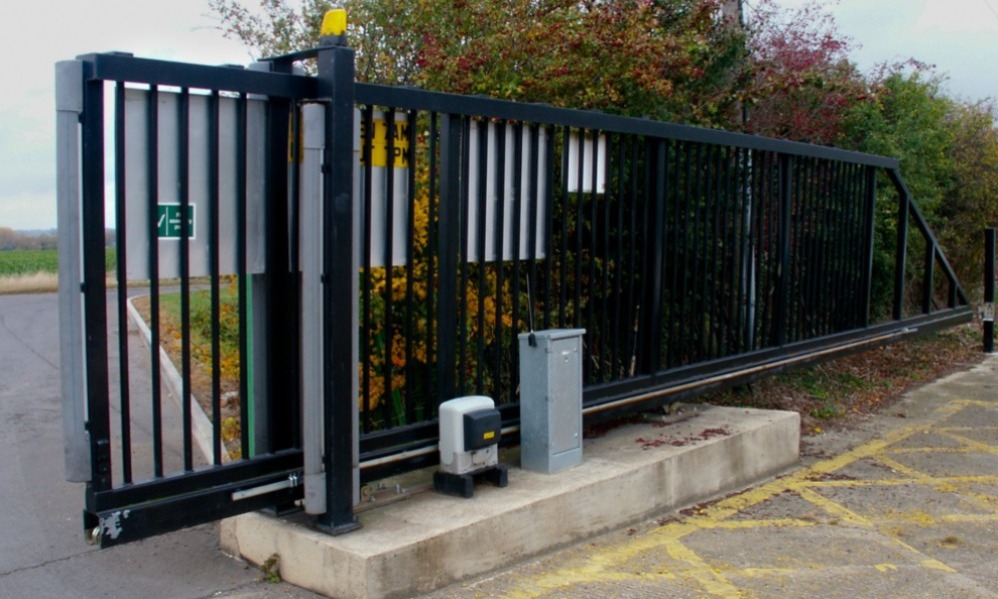
Industrial Gate Automation has different demands from ordinary residential gate motorization. Factory entrances may handle employee vehicles, trucks, material movement, visitors, contractors, and shift-based traffic, often requiring the gate to operate repeatedly throughout the working day.
For industrial properties in Nagpur, Maharashtra, selecting the right system requires attention to mechanical strength, operating frequency, access management, and serviceability.
Begin with the industrial workflow
Before choosing a motor, understand how vehicles use the entrance.
A manufacturing plant receiving heavy commercial vehicles has different requirements from a small workshop with occasional deliveries. Entrance width, vehicle turning radius, waiting space, security procedures, and shift timings can all influence the automation design.
The gate should support traffic movement rather than become a bottleneck.
Select the gate type around the site
Industrial entrances can use different configurations.
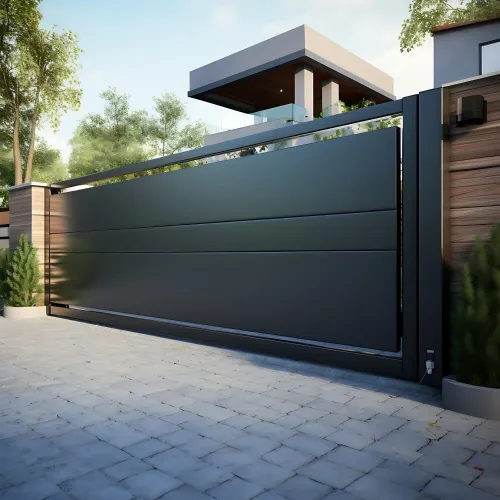
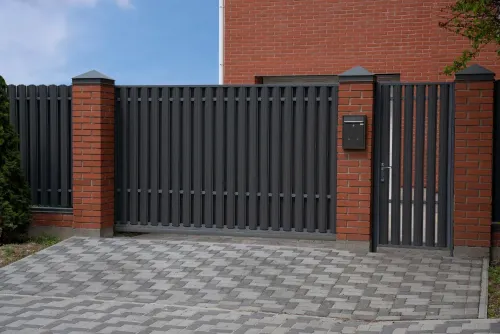
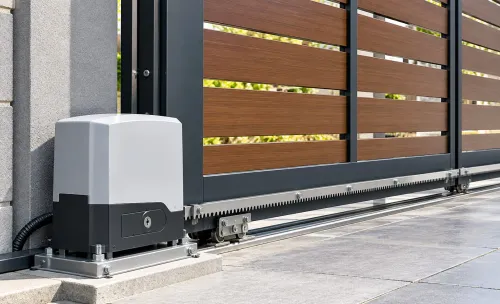
Sliding gates are often considered where sufficient lateral space is available. Cantilever gates may be evaluated where keeping the vehicle passage free from a ground track is important. Telescopic systems can help at wide entrances where run-back space is restricted.
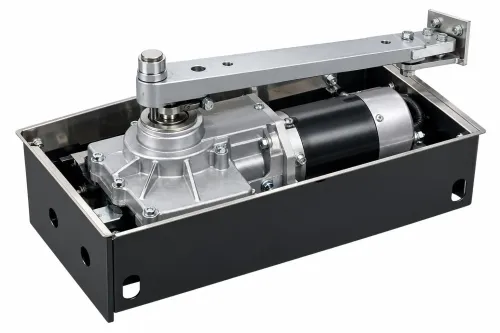
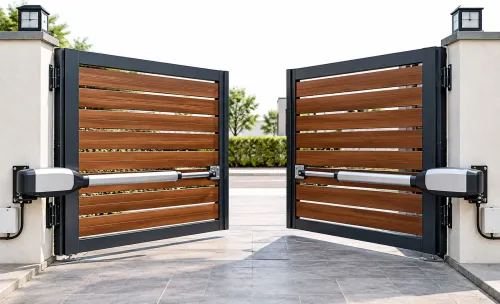
Swing systems may also be appropriate for selected sites with adequate clearance.
There is no single configuration suitable for every factory.
Motor duty matters
Industrial buyers should look beyond maximum gate weight.
Operating frequency is equally important. A motor that is technically capable of moving the gate may still be unsuitable if the application requires a substantially different duty cycle.
The selection process should consider:
- Gate dimensions and weight
- Daily operating cycles
- Peak traffic periods
- Gate movement condition
- Environmental exposure
- Access-control requirements
- Safety equipment
- Manual operation arrangements
These details should be established before final equipment selection.
Consider access control from the beginning
Industrial security teams may need different access procedures for employees, visitors, vendors, and logistics vehicles.
Automation can be planned around compatible access-control arrangements instead of treating gate movement and authorisation as completely separate projects.
Boom barriers may also complement the main security gate where faster vehicle regulation is needed during operational hours.
Maintenance should influence provider selection
Factories generally cannot afford to discover after installation that a critical entrance system is difficult to service.
Buyers should ask how routine inspection, mechanical maintenance, motor servicing, controls, sensors, and replacement requirements will be handled.
Clear manual-release or contingency procedures should also be established for power failures or equipment faults.
Nagpur Automation provides automation solutions for entrance and vehicle-control applications in Nagpur. A site assessment can help determine the appropriate gate configuration, operator capacity, controls, and safety provisions for a specific industrial environment.
Effective Industrial Gate Automation comes from matching equipment to real operating conditions. When factories evaluate traffic, gate mechanics, duty requirements, safety, access procedures, and maintenance together, they can build an entrance system that supports both security and everyday industrial movement.
Keywords