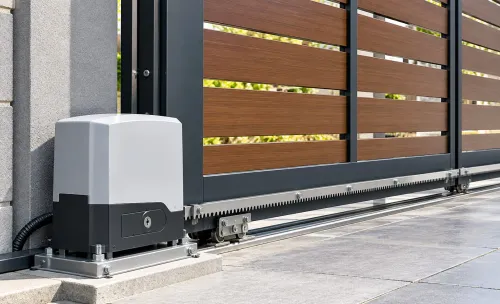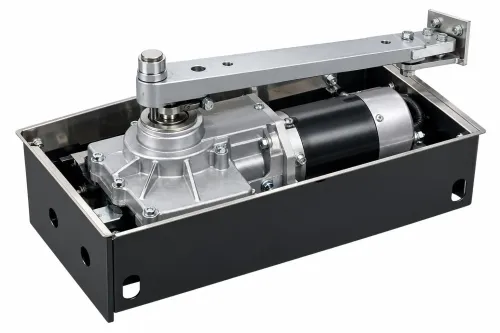
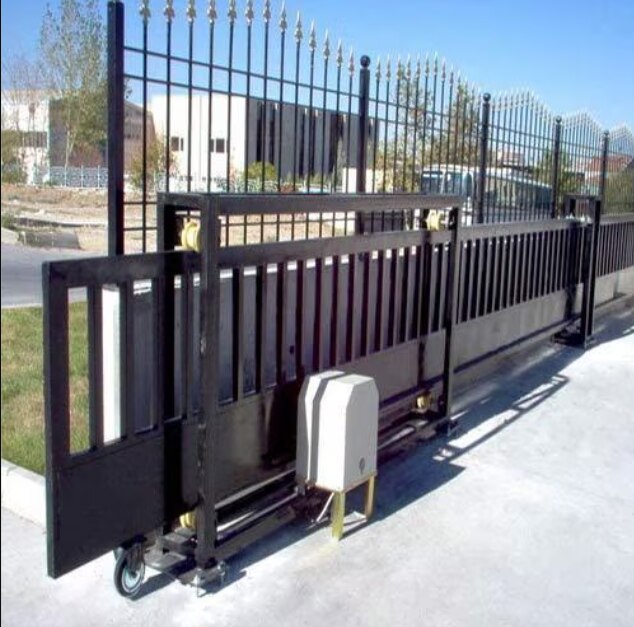
Heavy rain exposes weaknesses in the entrance, not just in the gate motor: water carries silt into tracks, pools around foundations and interrupts safety sensors. By the end, you will know when telescoping saves space, how to drain and protect the installation, and which technical details to demand before approving a quote.
Key takeaways
- Measure side-pocket depth before selecting a telescopic gate layout.
- Install drainage that keeps silt and runoff away from tracks.
- Specify safety sensors rated for wet outdoor conditions.
- Inspect tracks, rollers and drainage after every major storm.
Why telescoping helps when the entrance has limited side space
Yes, a telescopic gate offers a practical wet-season advantage when the entrance has a short side pocket but needs a wide vehicle opening. Its multiple leaves overlap and slide behind one another, reducing the stack-back length required by a single long sliding leaf.
That advantage covers space, not waterproofing:
- It preserves more driveway, wall, or boundary space beside the opening.
- It suits sites where a conventional leaf would extend into a low point, drain line, turning area, or pedestrian route.
- It allows the full opening to clear without pushing the gate far into the available side run.
- It helps keep the gate’s parking-side movement away from areas where vehicles and runoff converge.
A telescopic gate for Bhopal heavy rain is therefore useful when limited side clearance is the main constraint. The telescoping arrangement does not itself stop rainwater, mud, silt, or leaves from reaching the track, rollers, bearings, rack, or motor.
A telescopic gate Bhopal installation can face more wet-season adjustment problems than a single-leaf gate because several leaves must remain aligned and synchronised. The design also does not specify whether the system is ground-tracked or cantilevered, and neither version makes the entrance watertight.
Confirm that the finished floor drains away from the moving parts and motor before treating the compact stack-back as a rain advantage.
Check the site before choosing the gate layout
Measure the entrance before choosing the leaf arrangement: record the clear opening, driveway slope, available stack-back and every low point where monsoon water can collect. A site survey for a telescopic sliding gate bhopal project must also trace where roof, road and surface runoff travel during a short, intense storm.
Confirm these points on site:
- Measure the opening between finished boundary posts, not unfinished masonry.
- Measure the straight wall length available for stacked leaves, including space for the motor, rack and end stop.
- Record the driveway’s fall toward or away from the gate, plus the finished-floor level at the threshold.
- Mark drains, culverts and low spots; note whether water flows across the gate path or pools beside it.
- Identify the proposed motor and control-cabinet positions, then compare their height with the highest credible splash or flood level.
- Check cycle frequency, wind exposure and power-failure access before sizing the drive.
Ground-track and cantilever layouts respond differently to this evidence.
| Option | Site condition | Main consequence |
|---|---|---|
| Ground-tracked telescopic gate | A level, well-drained track path exists | Silt, leaves and standing water demand regular cleaning and accurate rail alignment |
| Cantilever telescopic gate | The opening crosses a flood-prone or dirty driveway | No rail crosses the vehicle path, but the side foundation needs counterbalance length, aligned carrier rollers and firm ground |
Do not select a larger motor to overcome a sloping, muddy or misaligned site. Confirm the drainage route and foundation dimensions first.
Keep rainwater, silt and runoff away from moving parts
Set the finished floor above the normal runoff path, then give the entrance a cross-fall that sends water to a cross-drain or trench drain. Do not let the driveway slope toward the motor foundation. A blocked drain can turn a short cloudburst into standing water around the gate.
A ground-tracked telescopic gate needs a channel with a firm, continuous fall toward a silt-accessible outlet. Keep the rail slightly above the surrounding paving where practical, and provide covers or clean-out points that let you remove mud, leaves and gravel.
A cantilever motorized telescopic gate in Bhopal avoids a rail across the vehicle opening, but its side foundation still needs careful drainage and alignment.
Specify these construction details before fabrication:
- A raised, reinforced motor foundation that cannot settle after saturation
- A level equipment pad separated from driveway runoff
- A counterbalance and carrier-roller foundation sized for the full leaf load
- A drain path that remains accessible after paving and kerbs are installed
Mount the control cabinet above the credible splash or flood level, not merely above the paving. Use downward-facing cable entries, sealed glands, drip loops and a separate drainage path around the pad; a high IP rating will not stop water entering through an unsealed underside.
After installation, disconnect power and move every leaf by hand. Then run repeated wet-weather cycles and confirm that no leaf binds, slips or stops at the wrong limit. That test exposes settlement and misalignment before the next storm does.
Specify safety systems that still work in rain
A photocell that works in dry weather can fail when rain, road spray or mud coats its lenses. Specify two monitored presence beams across the opening, with weather hoods, accessible lenses and a controller that prevents movement when either beam is interrupted or its circuit fails.
Telescoping leaves create extra pinch and shear zones as sections overlap and travel together. The safety design must cover the leading edge, the gaps between leaves, the guide path and exposed drive parts—not just the vehicle opening. Ask for:
- Pressure-sensitive safety edges on every hazardous closing edge
- Force limitation and automatic stop-and-reverse, tested after installation
- Guarded racks, chains and rollers, with separation that prevents finger access
- A risk assessment showing how the leaves stop without one section trapping against another
Mud can hold a photocell beam open or hide damage to an edge sensor. After heavy rain, clean both lenses, remove silt from sensor housings and test interruption from several heights; never accept a gate that continues closing after a beam is blocked. A larger motor does not solve this failure.
For an automatic telescopic gate bhopal specification, require a battery-backed controller that stops the leaves safely during a power cut, plus a manual release reachable from the safe side. Confirm that backup power does not bypass photocells, force limits or interlocks. Test slow, full and interrupted cycles in wet conditions before handover.
Compare quotes and inspect the gate after every major storm
A low price proves nothing until the quote states the cabinet’s IP rating, steel corrosion treatment, drainage falls and gate type. For a telescopic gate bhopal comparison, ask whether it is ground-tracked or cantilevered; the latter removes a silt-filled rail but needs a longer, stronger side foundation.
| Quote item | Dry-condition evidence | Rain-ready evidence |
|---|---|---|
| Motor and cabinet | Motor runs during a dry demonstration | Cabinet has a stated IP rating, raised foundation and intact cable glands |
| Movement and safety | Leaves complete open-close cycles | Wet-test operation, force limitation, photocell detection, stop/reverse response and safe clearance between leaves |
| Structure and track | Leaves align on clean ground | Galvanized or protected steel, sealed bearings where specified, drain holes and a documented track-cleaning method |
| Drainage | No visible ponding on test day | Hose-test the entrance; water reaches the drain without standing at rollers, rack, motor or cabinet |
Before accepting a motorized telescopic gate bhopal installation, require these tests:
- Run at least 20 complete cycles, including opening, closing, partial obstruction and power restoration.
- Spray water around the entrance without directing a high-pressure jet into electrical seals; confirm no nuisance stops, sensor failures or water entry.
- Verify manual release, limit settings, emergency stop and leading-edge reversal.
After every major storm, photograph ponding and check silt, leaves, loose fasteners, corrosion, bent leaves, roller noise, chain or cable tension, rack alignment, sensor lenses, drain paths and enclosure seals. Ask Nagpur Automation (08048400505) to record these findings against the installation’s baseline.
A quote for an automatic telescopic gate bhopal should include that inspection record, not just the gate price.
Related product
 | Motorized Telescopic Gate Automatic Telescopic Sliding Gate With the support of our professionals, we are involved in offering best quality of Automatic Telescopic Sliding Gate. View product → |
Frequently asked questions
Why does a telescopic gate suit an entrance with limited side space?
Its overlapping leaves slide behind one another, so the gate needs less side-pocket length than one long sliding leaf.
What should you check before choosing a telescopic gate layout?
Measure the opening width, available side pocket, ground slope, drainage route and vehicle turning space before requesting a design.
How can you keep rainwater and silt away from the gate mechanism?
Provide a drainage path away from the track, prevent runoff from crossing the entrance and remove silt before it reaches rollers or guide channels.
What safety systems should work during heavy rain?
Specify outdoor-rated photocells, edge sensors, controls and manual-release hardware, then test detection and gate stopping after wet-weather installation.
What should you inspect after a major storm?
Check the track for silt, standing water, loose fittings, damaged sensors and abnormal movement before returning the gate to automatic operation.
Keywords