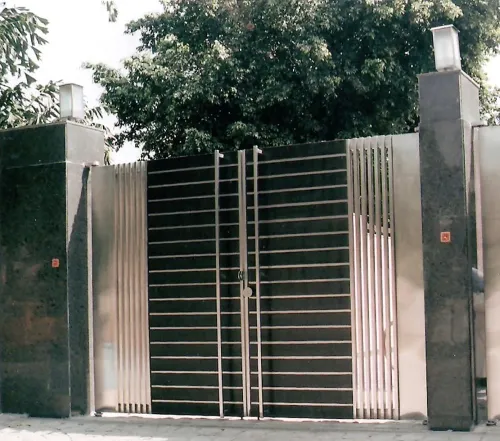
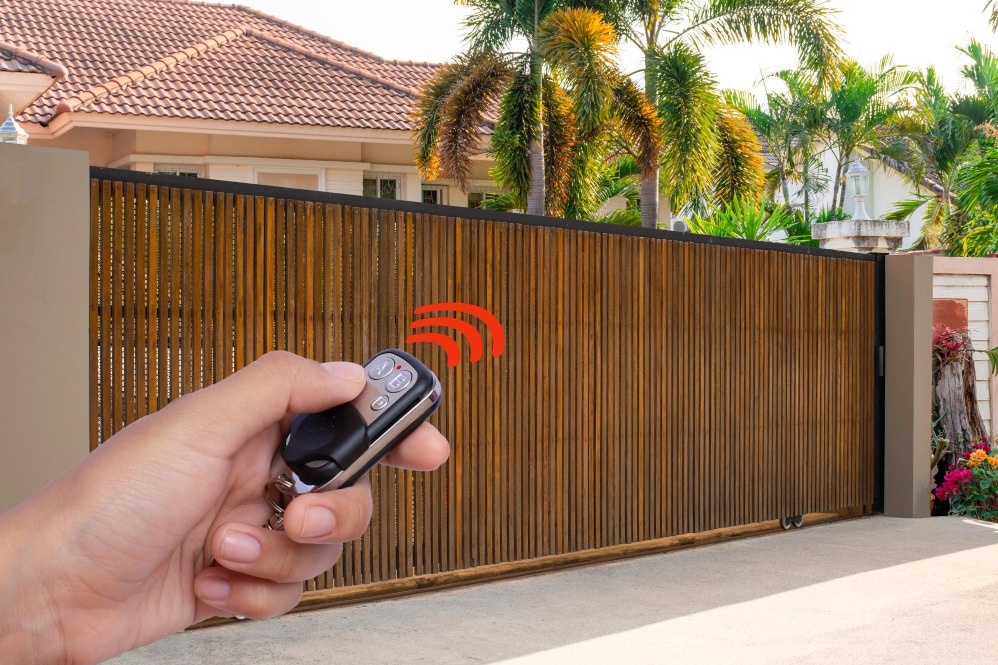
Choosing between a Swing Gate Motor and a sliding gate system starts with a simple question: how can the physical gate move most naturally within the available entrance space?
Both systems can automate vehicle access, but their mechanical arrangements and site requirements are different. For properties in Nagpur, Maharashtra, evaluating these differences before installation can prevent an unsuitable gate design.
How swing gate motors work
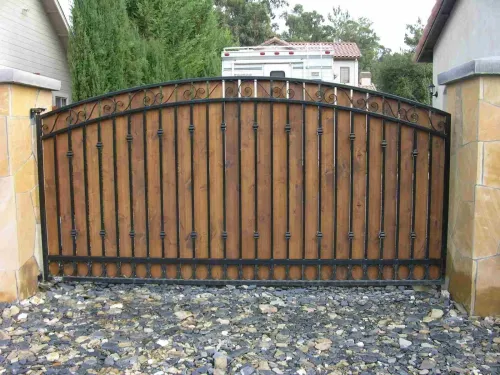
A swing gate operator moves a gate leaf around hinges attached to a fixed post.
Swing automation may work well when the property has sufficient clear space for the gate leaves to open without interfering with vehicles, walls, landscaping, or other structures.
Existing hinged gates may also be candidates for automation when their structural condition and geometry are suitable.
How sliding systems differ
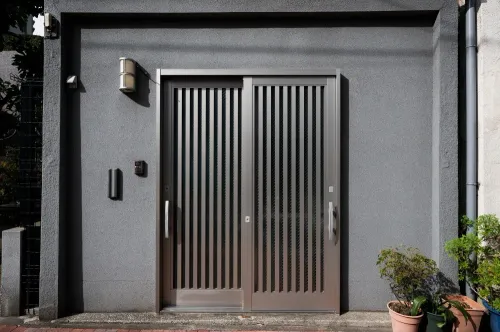
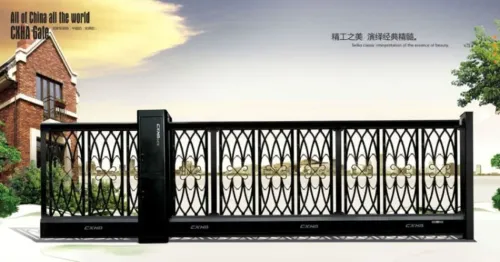
Sliding gates travel horizontally along the boundary rather than moving through an arc.
They are frequently considered where internal opening space is limited but sufficient sideways space exists beside the entrance.
This difference can be especially important on properties where vehicles need to wait close to the gate.
Compare the entrance before comparing motors
The choice should consider:
Available space: Swing gates require opening clearance. Sliding gates require lateral run-back space.
Ground conditions: Site levels and entrance geometry can affect the practicality of each design.
Gate structure: Weight, width, construction, hinges, rollers, tracks, and posts influence equipment selection.
Traffic frequency: Residential and industrial entrances may have very different duty requirements.
Maintenance: Both configurations contain mechanical and electrical components that require periodic inspection.
Safety: The movement area must be evaluated for vehicles, pedestrians, obstacles, and access-control requirements.
Is one system always better?
No.
A sliding gate can be an excellent solution on one property and unnecessarily complicated on another. The same applies to swing automation.
For example, a wide residential driveway with adequate internal clearance may accommodate a swing system effectively. A commercial entrance where that opening arc would interfere with vehicle movement may be better suited to sliding operation.
The site should therefore determine the gate configuration first. Motor specifications can then be matched to the chosen design.
Existing gates need evaluation
Property owners do not always need to replace a gate simply because they want automation.
An existing gate may sometimes be automated if its structure, movement, alignment, and dimensions are appropriate. However, automation should not be fitted merely to avoid repairing mechanical defects.
Nagpur Automation can assess entrance conditions in Nagpur before determining whether swing or sliding automation is the more practical approach.
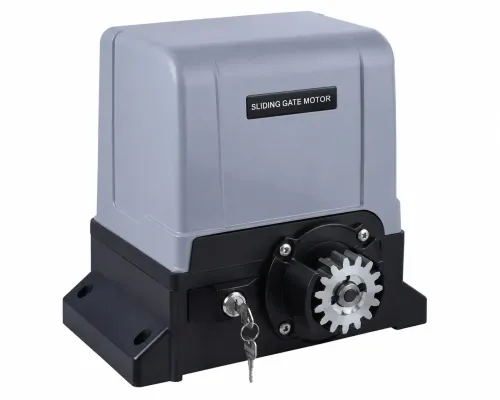
Selecting a Swing Gate Motor should ultimately be based on gate dimensions, leaf weight, usage frequency, structural condition, and required controls. When these factors are considered together, property owners can choose an access system that fits the entrance rather than forcing the entrance to fit the automation equipment.
Keywords