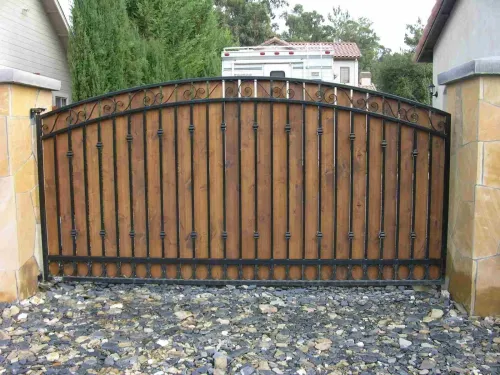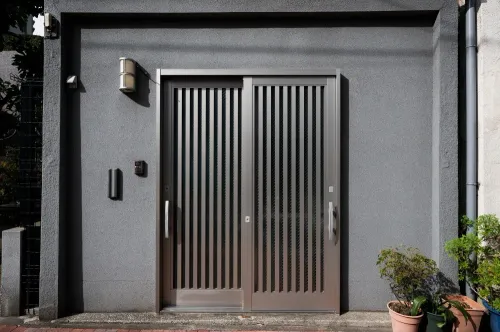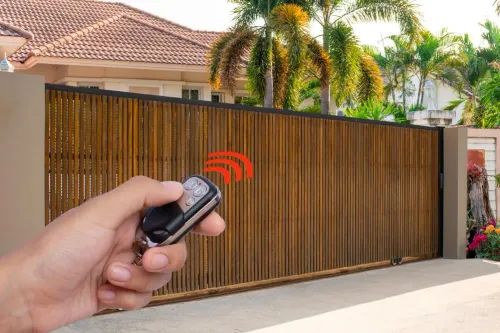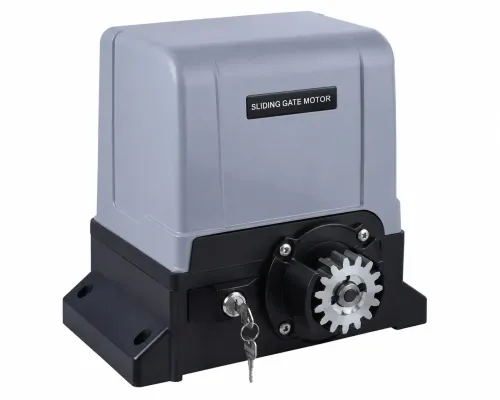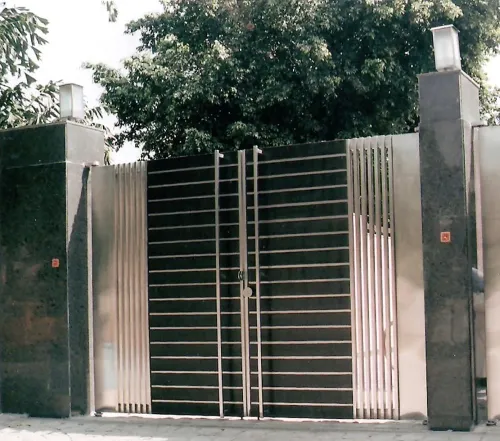
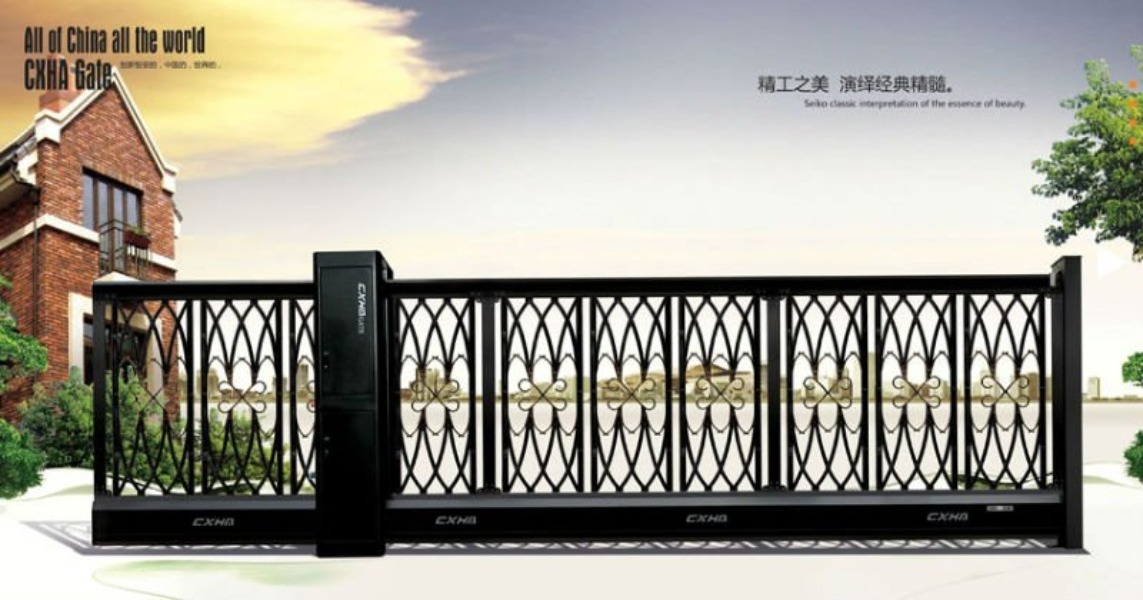
Sliding Gate Automation converts a manually operated sliding entrance into a powered access system. The gate travels horizontally along the boundary while a motor and controller manage its movement.
This arrangement is increasingly relevant for properties in Nagpur, Maharashtra, where entrance space, vehicle traffic, security management, and convenience all influence gate design.
What is included in sliding gate automation?
The motor is only one part of the complete system. A typical installation may involve a gate operator, control panel, drive rack, limit settings, remote controls, safety sensors, and manual-release mechanism.
Additional access-control equipment can be integrated depending on how the property manages visitors, employees, residents, or vehicles.
The exact configuration depends on the site rather than a fixed package.
The gate itself matters
Before automation is installed, the existing sliding gate should be mechanically sound.
It should move freely without excessive resistance. Damaged rollers, uneven tracks, poor alignment, or structural distortion can make the motor work harder than necessary.
A useful principle is simple: if a gate is difficult to move manually because of mechanical defects, adding a motor does not remove those defects.
Correcting the mechanical movement first can improve the reliability of the overall automated system.
Motor capacity should match the application
Motor selection depends on several factors, including:
- Gate weight and dimensions
- Number of daily operating cycles
- Residential or industrial application
- Track and roller condition
- Desired opening speed
- Control requirements
- Environmental exposure
A lightweight residential entrance and a large industrial gate should not automatically receive the same operator simply because both slide horizontally.
What about power interruptions?
Users often ask what happens when electricity is unavailable.
Many gate automation systems include a manual-release arrangement that allows authorised users to disengage the operator and move the gate manually. Backup-power options may also be considered where uninterrupted operation is important, subject to system compatibility.
The correct arrangement should be decided during system planning rather than after an outage occurs.
Why safety accessories matter
A powered gate creates moving machinery at an entrance used by people and vehicles. Safety sensors can help detect an obstruction and support safer operation when correctly installed and configured.
The entrance layout should also prevent unnecessary interaction between pedestrians and moving gate components.
For property owners evaluating Sliding Gate Automation in Nagpur, Nagpur Automation can assess the gate structure, movement condition, usage frequency, and access requirements before recommending a suitable automation configuration.
Successful automation begins with understanding the entrance itself. When mechanical condition, motor capacity, safety provisions, and access controls are treated as one integrated system, a sliding gate can provide convenient and controlled access without making operation unnecessarily complicated.
Keywords